
Simple Steps for a Greener Lifestyle
In today’s world, sustainable living starts at home. Whether you’re in a city apartment or a countryside house, adopting eco-friendly habits can make a big difference. These initiatives not only help the environment but also improve your health, save money, and inspire others.
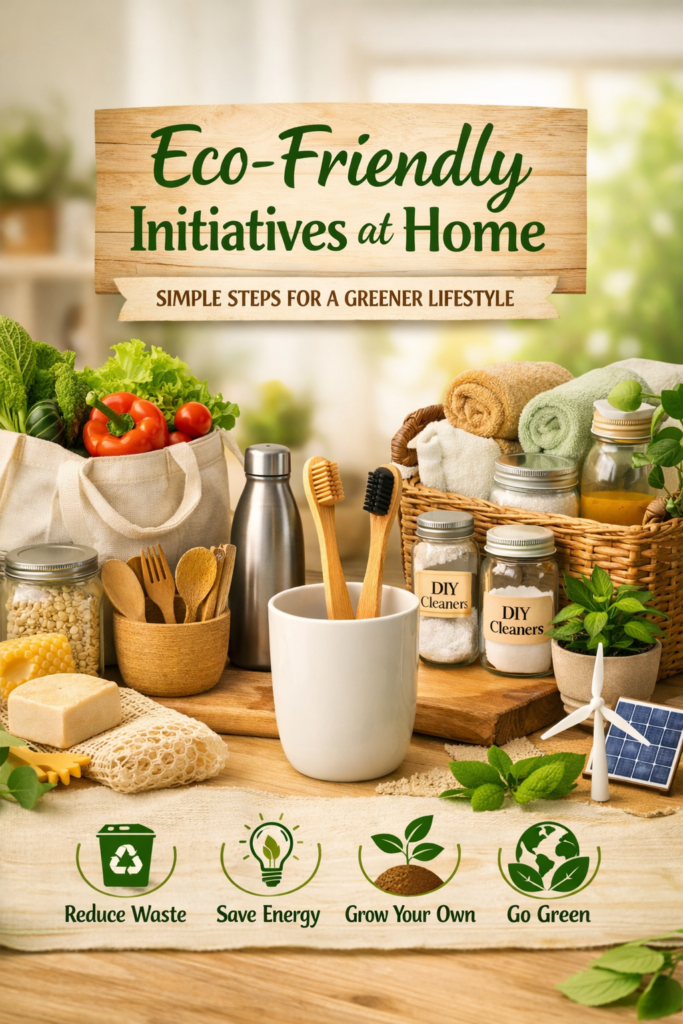
🌿 Introduction: Why Eco-Friendly Living Starts at Home
In an age where climate change, pollution, and resource depletion dominate headlines, the most powerful place to begin making a difference is right where you live—your home. Eco-friendly living isn’t reserved for environmental activists or off-grid adventurers. It’s for everyone who wants to make conscious choices that benefit both the planet and their personal well-being.
Imagine waking up in a home that breathes sustainability: sunlight streaming through energy-efficient windows, a kitchen stocked with reusable containers and fresh herbs from your balcony garden, and cleaning supplies made from simple, natural ingredients. These aren’t futuristic fantasies—they’re achievable realities with a few mindful changes.
Eco-friendly initiatives at home are about reducing waste, conserving energy, and embracing a lifestyle that values simplicity, health, and harmony with nature. Whether you live in a studio apartment or a spacious villa, you can adopt practices that lower your carbon footprint, save money, and inspire others.
Here’s what this article will explore:
- ♻️ How to reduce household waste with composting, reusable products, and smart shopping
- 💡 Ways to save energy through lighting, unplugging, and solar solutions
- 🌱 Tips for growing your own herbs and vegetables—even in small spaces
- 🧼 Recipes for natural cleaning products that are safe and effective
- 🌍 Examples of real families and communities embracing sustainability
These initiatives aren’t just good for the planet—they’re good for you. They promote cleaner air, healthier food, and a more intentional lifestyle. And the best part? You don’t have to do it all at once. Start small, stay consistent, and let your home become a model of mindful living.
Let’s dive into the practical steps that can turn your home into a green sanctuary—one habit at a time.
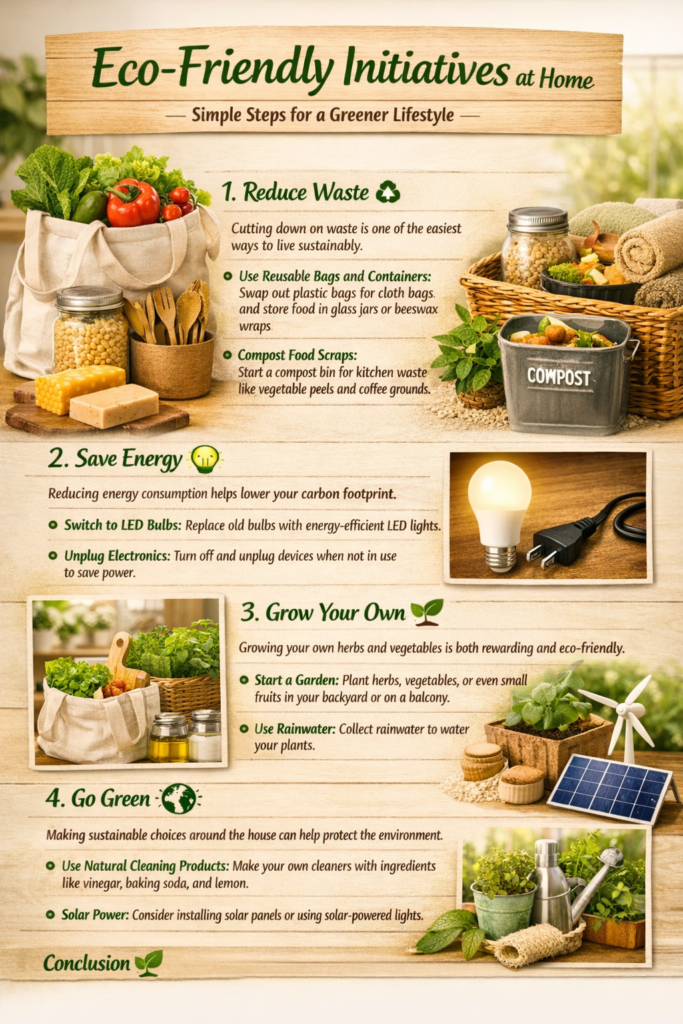
♻️1. Reduce Waste
Cutting down on household waste is the easiest way to go green.
- Use Reusable Bags and Containers: Replace plastic bags with cloth totes and store food in glass jars or beeswax wraps.
- Compost Food Scraps: Set up a compost bin for vegetable peels, coffee grounds, and eggshells. It reduces landfill waste and enriches your garden soil.
- Avoid Single-Use Plastics: Switch to bamboo toothbrushes, refillable water bottles, and metal straws.
2. Save Energy 💡
Energy-efficient homes are better for the planet and your wallet.
- Switch to LED Bulbs: They use 75% less energy and last longer than traditional bulbs.
- Unplug Devices: Turn off appliances when not in use. Use smart plugs or timers to automate this.
- Use Natural Light: Open curtains during the day to reduce dependence on artificial lighting.
- Install Solar Panels or Solar Lights: Even small solar garden lights can reduce electricity usage.
🌱 3. Grow Your Own
Home gardening is rewarding, sustainable, and therapeutic.
- Start a Kitchen Garden: Grow herbs like mint, coriander, and basil in pots or window boxes.
- Use Rainwater Harvesting: Collect rainwater in barrels to water your plants.
- Choose Native Plants: They require less water and are more resilient to local climate.
🧼 4. Clean Green
DIY cleaners are safe, affordable, and eco-friendly.
- Make Your Own Cleaners: Mix vinegar, baking soda, and lemon juice for an all-purpose cleaner.
- Avoid Harsh Chemicals: Commercial cleaners often contain toxins that harm indoor air quality.
- Use Microfiber Cloths: They clean effectively without needing chemical sprays.
🌍 5. Sustainable Shopping
Your buying choices shape the planet’s future.
- Buy Local and Seasonal Produce: Reduces transportation emissions and supports local farmers.
- Choose Eco-Certified Products: Look for labels like “organic,” “fair trade,” or “biodegradable.”
- Repair, Don’t Replace: Fix broken items instead of discarding them.
🏡 6. Smart Home Upgrades
Small upgrades can lead to big savings and sustainability.
| Upgrade | Benefit |
|---|---|
| Low-flow showerheads | Saves water and energy |
| Insulated windows | Reduces heating/cooling costs |
| Smart thermostats | Optimizes energy usage |
| Solar water heaters | Cuts electricity bills |
🌳 7. Eco-Friendly Decor
Style your home with sustainability in mind.
- Use Natural Materials: Decorate with bamboo, jute, cotton, and reclaimed wood.
- Upcycle Furniture: Repurpose old items into new decor pieces.
- Indoor Plants: Improve air quality and add a calming aesthetic.
🌿 Conclusion
Making your home eco-friendly is a journey, not a destination. Start small—switch a lightbulb, compost your scraps, grow a basil plant—and build from there. These choices ripple outward, influencing your community and protecting the planet for future generations.
🌿 Small Steps, Big Impact
Making your home eco-friendly isn’t about perfection—it’s about progress. Every small change you make contributes to a larger movement toward sustainability. Whether you’re switching to reusable products or growing herbs on your windowsill, these choices ripple outward, influencing your family, community, and the planet.
Here are a few real-life examples to spark your journey:
🧺 Example 1: The Zero-Waste Kitchen
Swap cling film for beeswax wraps, store grains in glass jars, and compost veggie scraps. One family in Bengaluru reduced their weekly trash output by 60% just by switching to reusable containers and composting.
🌞 Example 2: Solar-Powered Living
A couple in Pune installed rooftop solar panels and now power 80% of their home with clean energy. They also use solar garden lights and a solar water heater, cutting their electricity bill in half.
🪴 Example 3: Balcony Garden Bliss
In a small apartment in Mumbai, a teacher transformed her balcony into a lush herb garden using recycled pots and rainwater. She now grows mint, coriander, tomatoes, and even spinach—saving money and reducing packaging waste.
🧼 Example 4: DIY Cleaning Revolution
A homemaker in Hyderabad replaced chemical cleaners with homemade solutions using vinegar, baking soda, and lemon. Her home smells fresh, her kids breathe easier, and she saves hundreds of rupees annually.
♻️ Example 5: Community Composting
In Anekal, a group of neighbors started a shared compost pit. They collect kitchen waste weekly and use the compost for a community garden that now grows seasonal vegetables for all.
🌍 Final Thought
Eco-friendly living isn’t a trend—it’s a mindset. It’s about being mindful of what we consume, how we dispose of it, and how we care for our surroundings. Start with one initiative, involve your family, and build momentum. Over time, these habits become second nature, and your home becomes a beacon of sustainability.
So whether you’re brushing with bamboo, lighting with solar, or cleaning with lemon—you’re making a difference. 🌱