The Digital Revolution in Agriculture: How AI is Transforming Modern Farming
Agriculture, one of humanity’s oldest professions, is experiencing a technological renaissance. Artificial Intelligence (AI) is rapidly becoming the farmer’s most valuable partner, revolutionizing how we grow food, manage resources, and feed our growing global population. From precision planting to predictive analytics, AI is helping farmers work smarter, not harder, while addressing critical challenges like climate change, resource scarcity, and food security.
Precision Agriculture: Farming with Surgical Accuracy:
One of the most impactful applications of AI in agriculture is precision farming, where every square foot of farmland is monitored and managed individually. AI-powered systems analyze vast amounts of data from satellites, drones, and ground sensors to create detailed maps of soil conditions, moisture levels, and crop health.
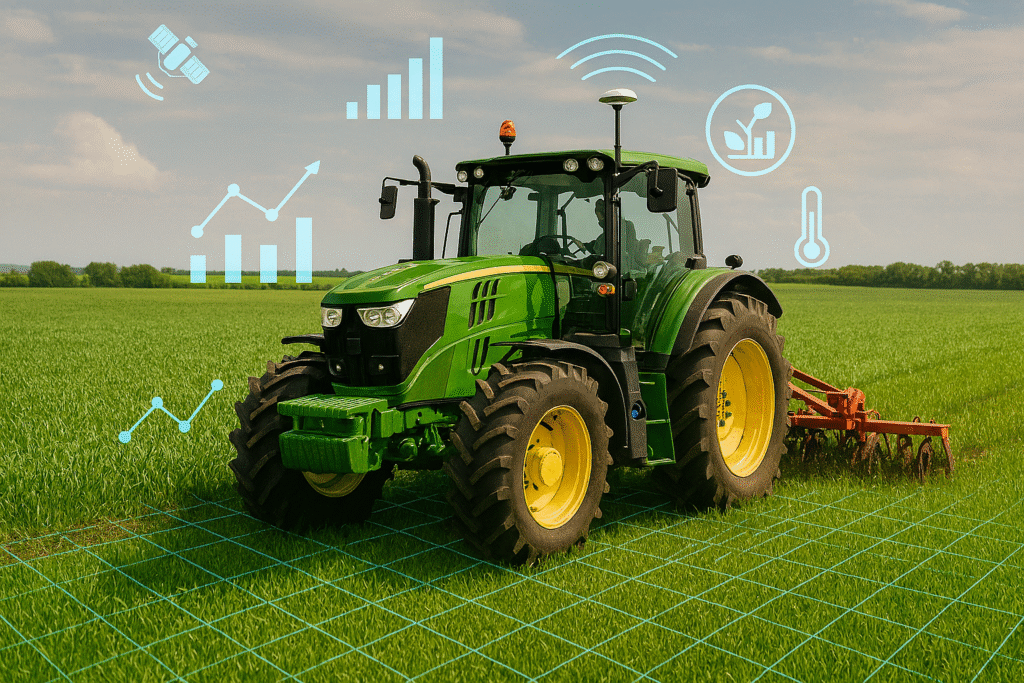
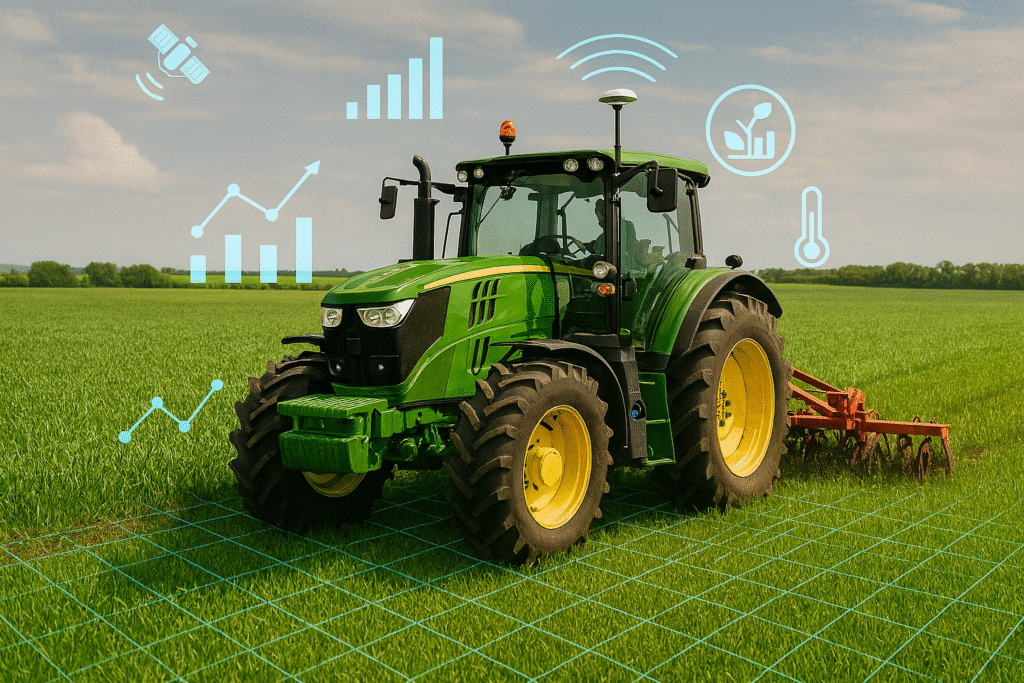
Example: Variable Rate Technology (VRT) John Deere’s AI-driven tractors use machine learning algorithms to analyze soil data and automatically adjust seed placement, fertilizer application, and irrigation rates in real-time. A corn farmer in Iowa reported a 15% increase in yield and 20% reduction in fertilizer costs after implementing this technology across 2,000 acres.
Crop Health Monitoring and Disease Detection:
AI-powered computer vision systems can identify plant diseases, pest infestations, and nutrient deficiencies long before they’re visible to the human eye. This early detection capability is crucial for preventing crop losses and reducing pesticide use.
Example: PlantNet and Similar Apps Farmers can now photograph suspicious plant symptoms with their smartphones, and AI algorithms instantly diagnose the problem and recommend treatment options. In Kenya, smallholder farmers using AI-powered diagnostic tools reduced crop losses from bacterial wilt by 40% through early intervention.
Example: Blue River Technology’s “See & Spray” This AI system, now owned by John Deere, uses computer vision to distinguish between crops and weeds at the individual plant level. It then applies herbicides only where needed, reducing chemical usage by up to 90% while maintaining effective weed control.
Predictive Analytics for Weather and Market Forecasting:
AI algorithms process historical weather patterns, satellite imagery, and market data to provide farmers with actionable insights about when to plant, harvest, and sell their crops.
Example: IBM’s Watson Decision Platform for Agriculture This AI system combines weather data, soil information, and crop models to predict optimal planting windows and harvest times. Cotton farmers in Brazil using this technology increased their yields by 25% while reducing water usage by 30%.
Autonomous Farming Equipment:
Self-driving tractors, harvesters, and drones are becoming increasingly common, allowing farmers to work around the clock while reducing labor costs and human error.
Example: Autonomous Tractors by Case IH These driverless tractors use GPS, AI, and sensor fusion to navigate fields independently, performing tasks like planting and tillage with centimeter-level accuracy. A wheat farmer in North Dakota reported completing spring planting 40% faster with two autonomous tractors working simultaneously.
Livestock Management and Animal Health:
AI is transforming animal agriculture through smart monitoring systems that track animal behavior, health, and productivity.
Example: Calfwatch and Similar Systems AI-powered cameras monitor calving cows 24/7, alerting farmers via smartphone when a cow goes into labor or shows signs of distress. This technology has reduced calf mortality rates by up to 50% on participating dairy farms.
Example: Precision Dairy Farming Companies like Afimilk use AI to analyze data from smart collars and sensors that monitor each cow’s eating patterns, activity levels, and reproductive status. This allows farmers to optimize feeding, detect illness early, and improve breeding success rates.
Resource Optimization and Sustainability:
AI helps farmers use water, energy, and other resources more efficiently, supporting sustainable farming practices.
Example: Smart Irrigation Systems Companies like CropX use AI to analyze soil moisture sensors, weather forecasts, and crop water needs to automatically control irrigation systems. Almond growers in California have reduced water usage by 20-25% while maintaining crop quality.
Supply Chain and Market Intelligence:
AI algorithms analyze market trends, consumer demand, and logistics data to help farmers make informed decisions about what to grow and when to sell.
Example: Farmers Business Network (FBN) This platform uses AI to analyze anonymized data from thousands of farms to provide insights on seed performance, optimal planting dates, and market pricing. Members report average savings of $15-20 per acre through better decision-making.
Challenges and Future Outlook:
While AI presents tremendous opportunities, farmers face challenges including high initial costs, the need for reliable internet connectivity, and the learning curve associated with new technologies. However, as costs decrease and user interfaces become more intuitive, AI adoption in agriculture is accelerating rapidly.
The future promises even more exciting developments, including AI-powered gene editing for crop improvement, fully autonomous farms, and integrated systems that manage entire agricultural ecosystems. Climate-smart agriculture powered by AI will be essential for feeding the world’s projected 10 billion people by 2050 while protecting our planet’s natural resources.
Conclusion:
AI is not replacing farmers—it’s empowering them to become more efficient, sustainable, and profitable. From the small organic farm using AI-powered pest detection to the large-scale operation employing autonomous machinery, artificial intelligence is democratizing access to advanced agricultural techniques. As we face growing environmental challenges and food security concerns, AI stands as a beacon of hope, offering solutions that benefit farmers, consumers, and the planet alike.
The agricultural revolution of the 21st century is digital, and AI is leading the charge toward a more sustainable and productive future for farming. For farmers willing to embrace these technologies, the potential for increased yields, reduced costs, and environmental stewardship has never been greater.
Disclaimer:
The information presented in this article is intended for general educational and informational purposes only. While every effort has been made to ensure the accuracy and relevance of the content, the field of Artificial Intelligence (AI) is rapidly evolving, and new developments may impact the validity of the information over time.
The views and opinions expressed in this article are those of the author and do not necessarily reflect the official policy or position of any organization or institution. Readers are encouraged to conduct their own research and consult with professionals or experts before making decisions based on the content of this article.
The article does not intend to promote or discourage the use of AI technologies but aims to provide a balanced overview of their potential benefits and challenges.