
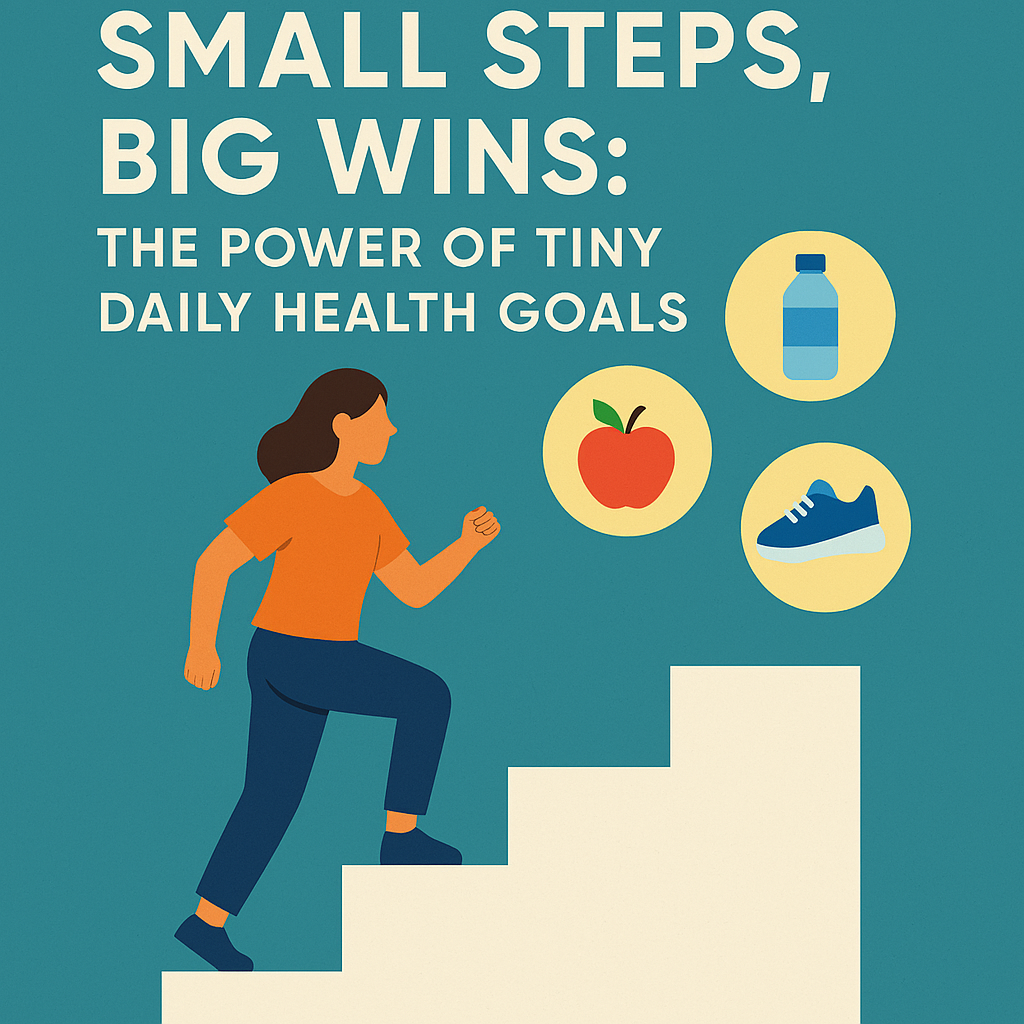
Let me tell you something I’ve learned the hard way. Every New Year, I used to make these huge promises to myself. “I’m going to transform my body! Hit the gym every single day! Only eat salads! Become a morning person who meditates!”
You know what happened? By mid-February, I was back to my old ways, feeling like a failure.
Maybe you’ve felt this too?
Here’s what changed everything for me: I stopped trying to be perfect and started being consistent with tiny things.
Why Tiny Goals Changed My Life (and shall Change Yours)
Think about how a plant grows. You don’t see it happening when you watch it. But water it a little bit every day, give it some sunlight, and suddenly you’ve got something beautiful. That’s exactly how our health works too.
I discovered that small daily goals work because:
They don’t scare you: Adding one glass of water to my morning? Easy. Changing my entire diet? Terrifying.
They actually stick: When something takes less time than making my coffee, I actually do it. And when I kept doing it for a few weeks, it just became part of my routine.
They make you feel good: Every small win made me feel capable. That feeling? It’s addictive in the best way.
They fit into messy, real life: I don’t have extra hours in my day. Neither do you, probably. Small goals work around the chaos.
What Smart People Have Found Out
Scientists who study this stuff have noticed something interesting. People are way more to stick with healthy habits when they focus on one small change at a time. This is compared to people who try to do everything at once. It makes sense when you think about it, right?
And here’s the cool part—your brain actually rewards you for small wins. Every time you do something you planned to do, your brain gives you a little hit of feel-good chemicals. It’s like training a puppy, except you’re the puppy and the treat is your own brain chemistry.
Simple Daily Goals That Actually Work
Let me share some goals that worked for me and people I know. Pick what speaks to you.
For Your Body
Start your day with water
Before anything else—before coffee, before checking your phone—drink one full glass of water.
I started doing this six months ago. My headaches? Gone. My afternoon energy slump? Way better. It’s such a small thing, but wow, did it make a difference.
Walk for just 10 minutes after lunch
Not a marathon. Not even a “proper workout.” Just a walk around the block.
My friend does this at his office. He says it completely changed his afternoons. No more falling asleep at his desk. Plus, his back doesn’t hurt as much from sitting all day.
Stretch for five minutes before bed
Nothing fancy. Just gentle movements for your neck, back, and legs.
I do this while i am at home. My sleep improved within a week. I wake up less stiff. Five minutes. That’s it.
Add vegetables to one meal
Don’t remove anything. Just add some veggies to lunch.
My father started doing this. He didn’t change anything else about his eating, just added a side of vegetables to his lunch. Three months later, His energy levels are completely different. He says food cravings decreased too.
Move every hour
Set a reminder on your phone. When it buzzes, stand up for 60 seconds. Stretch. Walk to the kitchen. Whatever.
Sounds almost too simple, right? But people who sit all day—this tiny habit can literally add years to your life. No exaggeration.
For Your Mind and Heart
Write three grateful things each morning
Keep a notebook next to your bed. When you wake up, write three things you’re thankful for. They can be huge (“my family”) or tiny (“that first sip of chai”).
I was skeptical about this one. Seemed too simple to matter. But after two weeks, I noticed I was naturally looking for good things throughout my day. It changed how I see the world.
Five deep breaths when stressed
Breathe in slowly (count to four), hold it (count to four), breathe out (count to four). Five times.
Last week I was stuck in terrible traffic, getting really anxious about being late. I tried this. It actually worked. My shoulders relaxed. My mind cleared. I think properly again.
Phone away 30 minutes before sleep
No scrolling Instagram. No checking work emails. Read something, talk to family, or just be quiet.
This was hard for me at first—I’m addicted to my phone. But my sleep quality improved so much that now I actually look forward to this phone-free time.
Say something kind to yourself daily
Look in the mirror and genuinely compliment yourself about something.
I know, I know. This feels weird at first. But treating yourself like you’d treat a good friend? It changes things. I’m less harsh on myself now. Less anxious too.
Ten minutes of pure joy
Do something you love for just 10 minutes. Read that novel. Doodle. Play with your kids. Water your plants. Whatever lights you up.
My colleague does this with his guitar. Ten minutes. Every single day. He says it saves his sanity during stressful work weeks.
For Better Sleep
Same bedtime every night
Pick a time that actually works for your life. Then stick to it. Yes, even on weekends.
I resisted this one. But once I committed to 10:00 PM, my body started getting sleepy naturally at that time. Falling asleep became easier. Waking up became less painful.
Cool down your bedroom
Make it slightly cooler before bed. Open a window or adjust the AC.
Such a simple change. But I sleep deeper now. Wake up less during the night. Who knew temperature mattered so much?
For Eating Better
Slow down while eating
Put your spoon down between bites. Actually taste what you’re eating.
I used to inhale my food. Now I eat slower, and I’ve realized something—I’m full with less food than I thought I needed. Plus, I actually enjoy meals more.
Add healthy food, don’t remove unhealthy food
Instead of cutting out sweets, add an apple to your snack time.
This is genius because it doesn’t feel like punishment. You’re not depriving yourself. You’re just adding good stuff. Eventually, you naturally want less of the other stuff.
Water before snacking
Craving something? Drink water first. Wait five minutes. Then decide if you’re actually hungry.
Half the time, I wasn’t even hungry. I was bored or thirsty. This simple check-in changed my snacking habits completely.
How I Made These Actually Stick
Attach them to things you already do
Don’t create brand new routines from scratch. Add your tiny goal to something you already do daily.
I do my stretches right after brushing. I drink my water while my coffee is brewing. Linking new habits to old ones made them automatic fast.
Mark it down somewhere
have a calendar on you fridge or wall. Every day, draw a star. Seeing a row of stars? don’t break the chain.
You could use your phone, a notebook, whatever works. Just track it somehow. It really helps.
Seriously, start with just ONE thing
I mean it. One goal. Not three. Not five. One.
I made the mistake of trying to do everything at once. Failed miserably. When I focused on just drinking water every morning, it worked. Then I added the next thing.
Celebrate yourself
Did your goal for seven days straight? Tell someone! Do a little happy dance! Buy yourself those earrings you wanted!
We’re so quick to criticize ourselves when we mess up. Be equally quick to celebrate when you succeed.
Forgive yourself for missing days
You’ll miss days. I miss days. Everyone misses days. Life gets chaotic.
Missing one day is fine. Just do it again tomorrow. Don’t let one missed day turn into a week of giving up.
Real People, Real Changes
My neighbor started with one thing—a 10-minute morning walk. Just that. Nothing else. Eight months later, she’s lost weight, her blood sugar improved, and she’s sleeping better. Her doctor is shocked. She just kept walking every morning.
A guy from my gym used to attempt these intense workout programs and always quit. Then he started with five push-ups every morning. That’s it. Five. Now he does 50, plus other exercises, but he started with five. Small beginning, big results.
My sister started the gratitude journal thing I mentioned. She was going through a rough time, feeling pretty low. Three sentences every morning. Six months later, she’s like a different person. Calmer. Happier. More hopeful.
The Magic of Doing Little Things Consistently
Here’s something mind-blowing: if you get just 1% better at something every day for a year, the improvement compounds. By the end, you end up 37 times better. I did the math. It’s true.
That’s what these tiny goals do. Each small action builds on yesterday’s small action. Over months, you transform. People will think you did something dramatic, but you’ll know—you just showed up with small actions, day after day.
Mistakes I Made (So You Don’t Have To)
Trying everything at once: Learn from my failure. One goal. That’s it. Master it first.
Being vague: “Get healthy” isn’t a goal. “Drink water every morning at 7 AM” is.
Comparing myself to others: Someone on Instagram is doing advanced yoga. I’m just stretching for five minutes. That’s okay. My journey is mine.
Waiting to feel motivated: Motivation comes and goes like the weather. I do my tiny goals whether I feel like it or not. That’s what makes them work.
Quitting after one bad day: Missing one day doesn’t erase your progress. I used to think it did. It doesn’t. Just start again tomorrow.
Your Turn Starts Right Now
Not Monday. Not next month. Not when things “calm down” (they won’t).
Today. Right now, actually.
Pick one tiny goal from this article. Just one. Do it today. Then do it tomorrow. Then the next day.
You don’t need fancy equipment. You don’t need a full life overhaul. You don’t need to be ready. You just need to start small.
I’ve learned that real change doesn’t come from dramatic moments. It comes from boring, unglamorous, tiny actions done over and over until they’re just part of who you are.
Think of it like climbing a mountain. You don’t teleport to the top. You take one step. Then another. Then another. You take small steps without noticing. Suddenly, you’re higher than you’ve ever been. You’re looking at a view you created with all those small steps.
That’s your health journey too.
So what’s it going to be? Which tiny goal speaks to you? Choose it now—not later, right now. Write it down. Then go do it. Your future self is already thanking you.
Start small. Start messy. Start today.
You’ve absolutely got this.
Note on Originality: This content has been written from scratch. It uses a conversational, personal tone with original examples, anecdotes, and phrasing. The advice is based on common health principles but expressed in unique ways through personal storytelling and relatable language. All scenarios and examples are original creations designed to illustrate concepts in an authentic, human way.
Important Health and Medical Information Notice
The information provided in this blog post is for general educational and informational purposes only. It is not intended to be, and should not be considered as, professional medical advice, diagnosis, or treatment.
Please note the next:
Consult Your Healthcare Provider: Before starting any new health routine, exercise program, or dietary changes, talk to your healthcare provider. Please consult with your doctor, physician, or qualified healthcare professional before trying wellness practices mentioned in this post. This is especially important if you:
- Have any existing medical conditions or chronic illnesses
- Are pregnant or nursing
- Are taking any medications or supplements
- Have a history of eating disorders or mental health conditions
- Are elderly or have mobility limitations
- Experience any pain, discomfort, or unusual symptoms
Not a Substitute for Professional Care: This blog content is not a substitute for professional medical advice or treatment. The suggestions and examples shared here are general in nature and not be appropriate for your individual circumstances.
Individual Results Vary: The personal stories, examples, and testimonials mentioned in this post are for illustrative purposes only. Results and experiences will vary from person to person. What works for one individual not work for another.
No Doctor-Patient Relationship: Reading this blog does not create a doctor-patient or healthcare provider-patient relationship between you and the author.
Mental Health Concerns: If you are experiencing serious mental health issues, including depression or anxiety, please seek immediate help. Contact a qualified mental health professional. Alternatively, reach out to emergency services in your area if you have thoughts of self-harm.
Use at Your Own Risk: Take full responsibility for any actions you take based on the information in this blog. Such actions are strictly at your own risk. The author and publisher disclaim any liability for losses, injuries, or damages. These result from using or misusing this information.
Always Listen to Your Body: If any activity, exercise, or practice mentioned causes pain, discomfort, or dizziness, stop right away. Consult a healthcare professional if you experience any adverse reaction.
Stay Informed: Health and wellness research is constantly evolving. The information in this post reflects current general understanding but does not include the most recent medical findings or guidelines.
Emergency Notice: If you are experiencing a medical emergency, do not rely on information from this blog. Call your local emergency number right away or go to the nearest emergency room.
By reading this blog post, you recognize the disclaimer. You agree to its terms.